
Senior strategy. Specialist execution. One team accountable for growth.
We don't put one account manager between your business and a collection of disconnected specialists. Every Fenix engagement is led by a Growth Lead responsible for the commercial direction of the account, supported by specialists across paid media, creative, analytics, CRO, development and lifecycle marketing.
The goal is not more campaigns. It is to understand what creates profitable growth, remove what is wasting money, and build the system required to scale what works.
Meet the team running your growth.
Senior operators. Specialist depth. One accountable growth team.
Every Fenix account is built around a Growth Lead who owns the commercial outcome, supported by specialists across paid media, creative, analytics, CRO and execution. We do not separate acquisition from measurement, and we do not call platform ROAS a business result. Decisions are tied back to CAC, contribution margin, payback and profitable growth wherever the underlying data allows it.

Nenad Vasic
Sets the agency's growth strategy and delivery standards. Oversees performance direction across acquisition channels and ensures every engagement is measured with clean attribution, consistent testing cadence, and accountable execution.

Jessica Minch
Oversees the operating system behind Fenix. Jessica is responsible for delivery standards, team coordination, client operations and making sure strategy moves into execution without gaps between departments.

Andrei Savtchenko
Owns the transition from opportunity to active engagement. Andrei works across lead generation, qualification, discovery and onboarding to make sure new clients enter Fenix with clear objectives, the right access, defined KPIs and an execution plan the delivery team can immediately work from.

Greg Gattner
Oversees lead generation performance and client success, connecting acquisition activity with what happens after the lead enters the business. Greg focuses on lead quality, pipeline performance, client communication and identifying where campaigns, funnels or follow-up systems are limiting growth.
Robert Hamilton
Robert oversees senior performance strategy across client engagements, connecting paid acquisition, creative testing, measurement and business economics. He helps ensure channel decisions are evaluated as part of the wider growth system rather than in isolation.
Greg Sanders
Greg oversees the systems that keep performance delivery consistent as accounts scale. He focuses on operating discipline, execution frameworks and making sure growth decisions are translated into repeatable actions across teams.
Nick Paterson
Nick works across client strategy with a focus on profitability, testing cadence and cross-channel decision-making. He supports senior account reviews and helps identify where budgets, channels or funnel performance are limiting profitable growth.

Frank Bennett
Frank is responsible for maintaining execution standards across client work, helping ensure strategy is translated into accountable, structured delivery and that performance quality remains consistent as accounts evolve.
Alexandra Stone
Alexandra oversees quality assurance across client delivery, with responsibility for documentation standards, operational consistency and communication processes that keep work organized and accountable.
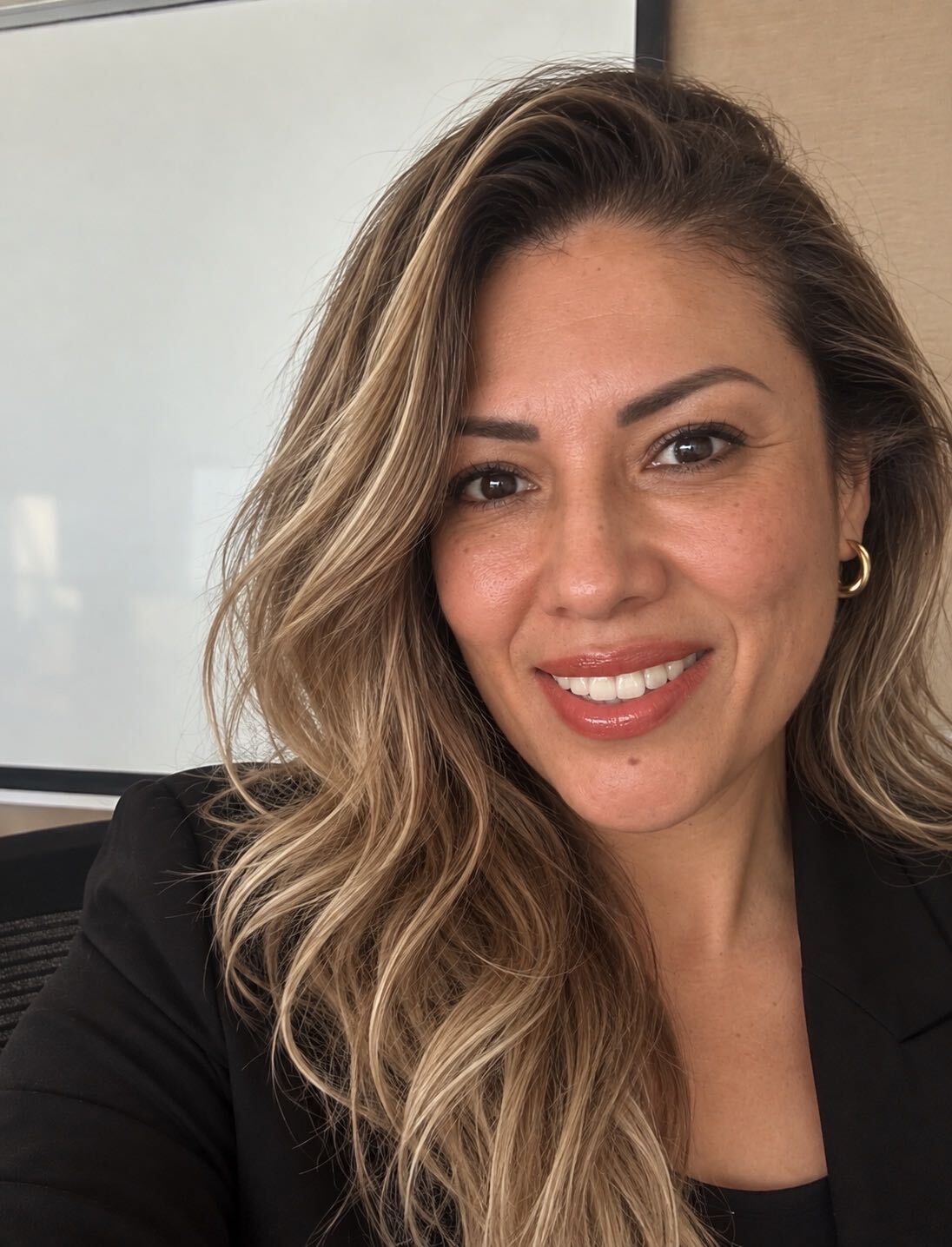
Julia Griffin
Julia oversees client-facing delivery standards and retention systems, focusing on communication quality, reporting clarity, account cadence and the overall experience clients have working with Fenix.
For security, privacy and confidentiality, we don't publish the full delivery team roster. We publicly show the leadership structure and the people responsible for maintaining the Fenix standard, once an engagement begins, responsibilities are clearly assigned and you know exactly which people and roles are accountable for your account.
A dedicated delivery pod, not a rotating cast.
Every client is assigned a pod built around accountability, speed and measurement integrity, designed to move from setup to optimization to scaling without gaps in ownership.
Growth Lead
Owns strategy, goals, budget allocation and weekly priorities. Responsible for direction, performance decisions and outcomes.
Builds and optimizes Google Search and performance campaigns. Owns structure, search intent mapping, negative keyword strategy and query cleanup.
Runs Meta acquisition and retargeting systems. Owns creative testing cadence, audience strategy, funnel progression and performance stability at scale.
Ensures tracking accuracy and reporting integrity. Owns conversion setup reviews, deduplication checks, event QA and dashboard alignment.
Translates strategy into creative direction. Owns angles, hooks, ad iteration briefs and alignment between ads and landing pages.
Keeps execution moving. Owns timelines, tasks, asset collection, approvals, handoffs and documentation.
Specialist support, added as needed
Want to know exactly who'd be on your pod?
Ask On A CallQuality enforced through process, not personality.
Measurement Standards
- Primary conversions defined at onboarding and reviewed regularly
- Conversion events checked for inflation and duplication
- Reporting prioritizes CPA, CAC, MER, contribution margin and payback period
- Demand capture separated from demand creation wherever possible
Quality Control
- Internal peer review for major structural changes
- Pre-launch checklists for tracking, targeting, creative and URLs
- Change logs kept for significant account updates
- Clear escalation path through Operations when needed
Security & Confidentiality
- Client-owned ad accounts and assets wherever possible
- Role-based access on a least-privilege standard
- Confidentiality controls with NDA-safe documentation
- Executive escalation coordinated through Operations
Specialist teams under one delivery system.
Run together for speed and depth, not handed off between disconnected vendors.
Trusted to solve real growth problems.
Not every company comes to us with the same problem. Some need to find demand. Some have traffic but cannot convert it. Some are growing but losing margin. Some have reached the point where the marketing department itself needs rebuilding. Our job is to identify the constraint and put the right specialists around it.
Marketing does not fail in channels. It fails between them.
A Meta campaign can be profitable and the business can still lose money. Google can deliver high-intent traffic and a weak offer can still kill conversion. A landing page can convert and poor sales follow-up can still destroy CAC. That is why we do not optimize channels in isolation, we connect acquisition, creative, conversion, measurement, retention and sales economics into one operating system.
Economics
Demand
Conversion
Measurement
Retention
Scale
One system. One set of numbers. One growth objective.
What you can hold us accountable to.
Not a comparison to anyone else, just the factual commitments we operate against every day.
Questions people have about the team.
A dedicated delivery pod built around the needs of the business. Your Growth Lead owns the strategy, priorities, budget direction and overall performance of the account, supported by specialists across paid search, paid social, tracking and analytics, creative strategy, project management, and any additional capabilities the engagement requires. Ownership is defined from the beginning, responsibilities are documented, and you know exactly who is accountable for each part of the growth system.
Yes. We do not believe senior strategy should disappear behind layers of account management. Your Growth Lead stays close to the commercial performance of the account, and the specialists responsible for Google, Meta, analytics or creative are directly involved where their expertise is required. You should never have to wait for an account manager to "ask the media team" why a major decision was made.
No. Paid media, strategy, creative, analytics, project management, CRO, development and every other function we provide is handled within our own operating structure, deliberately. When those functions are handled by disconnected external vendors, each party sees only its own piece of the funnel and accountability becomes difficult very quickly. Keeping delivery in-house means one team sees the same numbers and works toward the same commercial objective.
Not campaign changes for the sake of activity, establishing enough truth about the business to make good decisions. We start with the economics: revenue, gross margin, AOV, customer acquisition cost, lead economics, sales conversion and what the business can realistically afford to spend to acquire a customer. Then we audit the systems influencing that result, verify conversion tracking for duplicated or misleading events, and identify the primary constraint, whether that's traffic quality, creative, a weak offer, a leaking website, or a sales process that isn't converting the leads marketing generates. By the end, the goal is clean measurement, clear economics, defined priorities and an agreed testing roadmap.
Yes, and in many cases that's the best structure. Fenix doesn't need to replace a capable internal team to create value, we can operate as the external growth layer around your existing department, filling gaps where deeper specialization, execution capacity or senior performance oversight is required. Responsibilities are defined at the beginning so there's no duplicated work or confusion about ownership. The objective is the strongest possible team around the growth problem, not proving Fenix should control everything.
You do, always. Wherever the platform allows it, advertising accounts, analytics properties, pixels, merchant accounts, websites, customer data and other business assets remain under your ownership, Fenix receives only the access required to do the work. If the relationship ever ends, your accounts, historical data, audiences and assets remain yours. We don't believe an agency should create dependency by holding a client's advertising infrastructure hostage.
ROI is the final score, not clicks, impressions, CTR, or even platform ROAS by itself. A campaign with a beautiful CTR that loses money isn't successful, and a campaign showing 5x platform ROAS can still be a bad investment if margin, refunds, discounts or fulfillment costs destroy the actual return. We work backwards from revenue, gross margin, acquisition cost, contribution margin, repeat purchase behavior and LTV. We still track CPC, conversion rate, CPA and ROAS, but they're diagnostic metrics explaining why ROI is moving, not the final business result.
Yes, across the United States, the Middle East, Europe and Asia, including businesses operating under one brand across multiple countries. Search behavior, competition, media costs, customer expectations and creative response all change between markets, so multi-market growth requires more than duplicating one campaign and changing the geography. We keep the measurement framework and overall strategy connected while adapting execution to each market, and we look at performance both individually by market and at the consolidated business level, to answer where the next dollar of growth capital should actually go.
We deliberately control this rather than fixing a universal number, because account complexity matters more than account count. A single-market business spending $30,000 a month doesn't require the same senior attention as a multi-country business running several channels on a seven-figure media budget. The standard is simple: if a Growth Lead can't stay close enough to a business to understand the numbers, challenge the strategy and make informed decisions, they don't get another account. We'd rather limit capacity than turn senior strategy into account administration.
For security, privacy and confidentiality. We publicly show the leadership structure and the people responsible for maintaining the Fenix standard, but we don't publish every employee or specialist with access to client infrastructure. That doesn't mean ownership is hidden, once an engagement begins, responsibilities are clearly assigned and you know exactly which people and roles are accountable for your account. Transparency should mean knowing who's accountable for your business, not publishing an internal employee directory on the internet.
Through process, not through hoping the right person notices a problem. Major structural changes go through internal review, launches are checked across tracking, targeting, URLs and creative, conversion events are reviewed for duplication or inflation, and significant changes are documented so an account's history doesn't disappear into Slack messages or someone's memory. When an issue requires senior involvement, there's a defined escalation path through Operations and leadership, and the system becomes more disciplined as spend and financial consequences increase.
Access is provided based on what each person actually needs to do their role. Wherever possible you remain the owner of the underlying account and Fenix is granted role-based access rather than ownership, sensitive information is handled under confidentiality and NDA requirements, and we avoid unnecessarily distributing access to people who don't need it. Your data belongs to your business, access should be controlled, documented and limited to the people who need it to do the work.
We tell you. Growth problems rarely respect agency scopes, you may hire us for Google Ads and discover the real constraint is the landing page, or hire us for lead generation and find the sales team is only following up with a fraction of the leads. We won't create work simply because another service exists inside Fenix, but we also won't ignore a material problem because it sits outside the original statement of work. We explain what we see, quantify the impact where possible, and let you decide who's the right person to solve it.
We don't hide behind reporting, we work backwards through the system: is the traffic wrong, is demand too expensive, is creative fatigue increasing acquisition cost, is the offer weak, is the landing page losing qualified buyers, is tracking reporting the wrong result, is the sales process failing after marketing generates the opportunity. The objective is identifying the constraint quickly enough to make a decision, whether that's to optimize, rebuild, reduce spend, or stop something entirely. Protecting client capital is part of performance marketing, spending the full budget is not.